The Tunisian Dinar for Tourists: Exchange, Cash vs Card, ATMs and Tipping
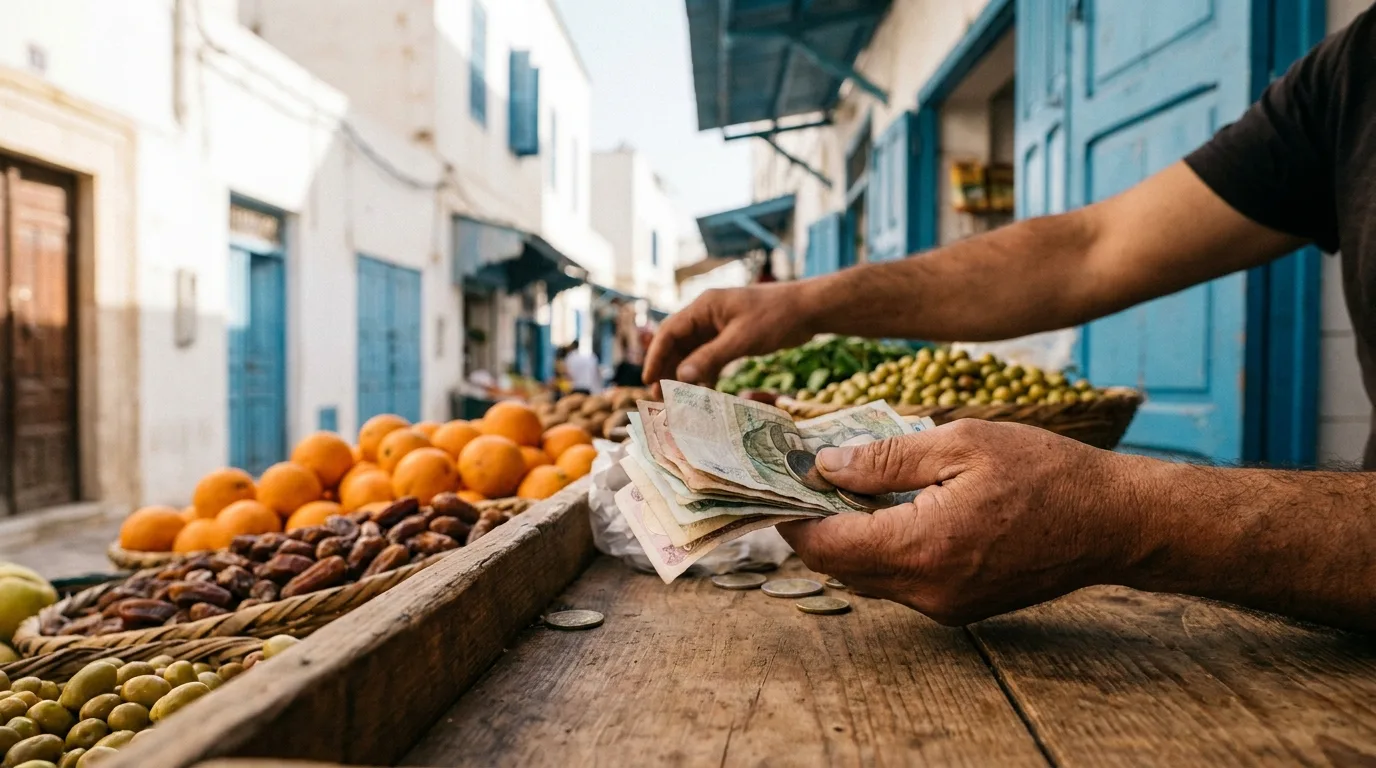
The Tunisian dinar catches almost every first-time visitor out, and not because it is expensive: it is because you cannot get hold of any before you arrive. As the hosts of Résidence Green B11 in Aïn Zaghouan Nord, we get this question from nearly every guest, usually about a week before they fly. So here is the whole picture: how the currency works, where to change money, when a card is enough and when only cash will do, and what tipping actually looks like in Tunisia.
The rule that surprises everyone: the dinar is a closed currency
You cannot buy Tunisian dinars at a bureau de change at home, and you are not meant to carry them out of the country when you leave. The dinar is a closed, non-convertible currency: it exists inside Tunisia and essentially nowhere else. In practice that has three consequences for your trip.
- Arrive with spendable foreign cash to change here, or plan on using an ATM soon after you land. Euros are the easiest to change, and sterling and dollars are handled without fuss too.
- Change money in sensible instalments rather than converting your whole budget on day one, so you are not sitting on a pile of dinars on your last morning.
- Keep your exchange receipts. You need them if you want to convert leftover dinars back before you fly out, and the amount you are allowed to convert back is capped.
One more thing worth knowing before you get here: the dinar is divided into 1,000 millimes, so prices are often written with three decimal places. A coffee marked 2.500 is two and a half dinars, not two thousand five hundred of anything.
Where to change money in Tunis
Exchange rates in Tunisia are set centrally rather than left to the market, so there is far less variation between counters than you might expect. Hunting for a better rate across town is rarely worth the taxi fare. What does vary is convenience and opening hours.
| Where | Worth knowing |
|---|---|
| Tunis-Carthage airport arrivals | Open for arriving flights, including late ones. The obvious first stop for enough cash to get you through your first day or two. |
| Banks in town | Reliable, but keep local banking hours in mind and expect to show your passport. |
| Hotel reception desks | Convenient if you are staying in a hotel, usually a slightly less generous rate. |
| Anyone who approaches you in the street | Avoid. Unofficial exchange is illegal here, and the short-change risk is entirely yours. |
Whichever counter you use, you will be asked for your passport and given a receipt. Put the receipt somewhere you will still find it at the end of the trip.
Cash or card? The simple rule
Tunisia is a cash country with a growing card layer on top. The rule we give guests is easy to remember: if the business has a till and a name above the door, your card will probably work. If it has a counter, a basket or a meter, bring notes.
- Card is usually fine: supermarkets and the big chains, hotels, larger restaurants, pharmacies, petrol stations, and most places that cater to visitors.
- Cash only, realistically: taxis, cafés, bakeries, the greengrocer, market stalls, small local restaurants, hammams, parking attendants and anyone selling from a cart.
Taxis deserve a mention because they are the one thing you will use every day: metered and genuinely cheap when the meter is running, and drivers are paid in cash. We wrote up the real fares, the night rate and the airport-rank markup in our guide to taxi prices in Tunisia.
Using ATMs without paying twice
Cash machines, signposted as distributeurs, are easy to find across Tunis and along the coast at La Marsa and Sidi Bou Saïd. They dispense dinars only, and a few habits will save you money and frustration.
- If the screen offers to charge you in your home currency instead of dinars, decline it and choose dinars. That offer is dynamic currency conversion, and it is always the worse rate.
- Withdraw in larger amounts less often. Most foreign banks charge a flat fee per withdrawal on top of any percentage.
- Machines attached to a bank branch are the safest bet, and the next branch along is usually working when one is not. Weekends and public holidays are when machines run dry.
- Tell your bank you are travelling. A card blocked for suspicious activity on your first evening is a miserable way to start a holiday.
Small notes are worth more than they look
ATMs like to give out the largest notes they hold, and almost nobody at street level wants to break one. A taxi driver, a café or a bakery will very often not have change for a 50. Break big notes deliberately: pay for a supermarket shop in cash, and keep the small notes and coins for daily life. It sounds trivial and it makes a surprising difference to how smoothly a week goes.
Tipping in Tunisia: what is actually expected
Tipping here is warm rather than obligatory. Service is not usually added to the bill, and nobody is standing over you with a percentage. The honest version, as locals practise it:
- Cafés and casual meals: round up, or leave the loose coins from your change.
- Restaurants with table service: somewhere around 5 to 10% is generous and very well received.
- Taxis: round up to the next dinar. There is no expectation beyond that.
- Porters, guides and drivers on a day trip: a small note, in cash, handed over directly.
- Anywhere you have been helped for free: nothing is expected, and a genuine chokran goes a long way.
Tips are cash, always. Adding a tip to a card payment is not really a thing here.
Paying for the stay itself
There is one payment you should not be making in cash, and that is your accommodation. Because the dinar is closed, the sensible way to book an apartment in Tunis is by card, in advance, in a currency you already hold, then to bring or withdraw dinars for daily life once you are here. We cover the practicalities in our guide to renting a holiday apartment in Tunis, and our SIM card and eSIM guide explains how to get connected at the airport.
At Résidence Green B11 we quote and take payment for the apartment by card before you arrive, so the only cash you need to think about is the fun kind: the coffee on the terrace, the taxi to Sidi Bou Saïd, the box of dates from the market down the road. We are ten minutes from the airport in Aïn Zaghouan Nord, and we are happy to point you to the nearest reliable cash machine when you get here.