Digital Nomad in Tunisia: Visa, Wi-Fi, Costs and Where to Live
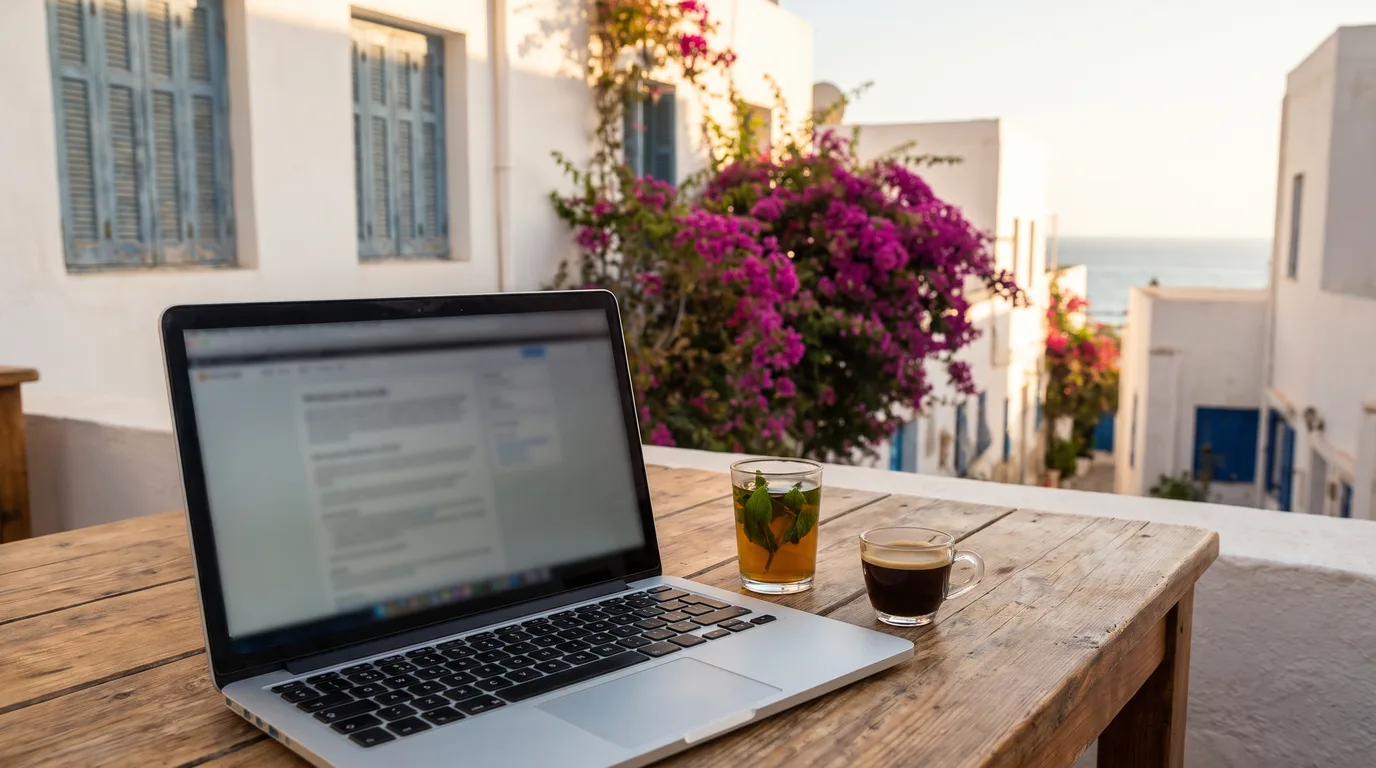
A growing share of the messages we receive at Résidence Green B11 start the same way: "I work remotely, can I do my job from your apartment for a month?" The short answer is yes, and Tunis is one of the most underrated bases around the Mediterranean for it. The longer answer depends on your passport, how much you rely on a stable connection and what kind of neighbourhood you want around you. Here is what we tell remote workers before they book, as hosts who live and work here.
Why Tunis works for remote workers
Three things make Tunis easy to work from. First, the time zone: Tunisia stays on UTC+1 all year with no daylight saving change, so you share a clock with Paris, Berlin and Rome all winter and sit one hour behind them in summer, while London is never more than an hour away. Overlap with European teams is effortless, and a US East Coast morning is a Tunis afternoon. Second, everyday life is affordable: local food, cafés, taxis and mobile data cost a fraction of Western European prices. Third, it is close: Tunis-Carthage airport has short, frequent flights to most European capitals, which matters when a work trip or a family visit comes up.
It is not a polished nomad hub with a big English-speaking scene, and that is part of the appeal. French is the working language of business and Tunisian Arabic is spoken in the street; English is common among younger people, in tech and in the northern suburbs.
Visas and how long you can stay
At the time of writing, Tunisia does not have a dedicated digital nomad visa. Most remote workers come in on ordinary visa-free entry: citizens of the EU, the UK, Canada, the US and many other countries can stay visa-free for up to about three months, and a few nationalities get longer. Rules differ by passport and change from time to time, so check the official guidance for your own nationality before you book flights.
A few practical points we always share:
- Keep your entry stamp and onward ticket handy; you may be asked about your plans on arrival.
- Overstaying is not a good idea: it can mean a fine and questions at the airport when you leave.
- Staying longer legally means a residence permit (carte de séjour), handled locally, which is a separate process with its own paperwork. If you are planning more than three months, look into it well in advance.
Internet: what to expect, and your backup plan
Fiber is widely available in the newer residential areas of northern Tunis, including Aïn Zaghouan, Lac 1 and Lac 2 and La Marsa, and it is fast enough for video calls, large uploads and streaming. Older buildings and the centre can still be on slower copper lines, so if you book anywhere, ask specifically whether the connection is fiber.
Two habits will save you a bad day:
- Carry a mobile data backup. 4G is fast in Tunis, and all three operators launched 5G in February 2025. A local SIM with a generous data pack doubles as a hotspot if the Wi-Fi drops or the power flickers during a storm. Our Tunisia SIM card and eSIM guide explains how to get one with your passport.
- Know a fallback café or coworking space. Short power cuts are uncommon in our area but they happen, usually in summer heat or winter storms. Having a second place to work means a call never gets missed.
Where to base yourself in Tunis
| Area | Best for | Trade-off |
|---|---|---|
| La Marsa | Seaside lifestyle, cafés, evening walks on the corniche | Busy and pricier in July and August |
| Lac 1 and Lac 2 | Modern offices, coworking spaces, international cafés | Feels more business district than neighbourhood |
| Aïn Zaghouan Nord | Quiet residential base, close to the airport, La Marsa and Lac | You will take short taxi rides rather than walk everywhere |
| Downtown and the Medina | Atmosphere, history, culture on your doorstep | Noisier, older buildings, connection varies |
For a full neighbourhood breakdown, see our guide to where to stay in Tunis.
What a month costs
Accommodation is the line that decides your budget, and the two levers are the season and the length of the stay. July and August are high season along the northern coast; September to June is much better value and the weather is pleasant for most of it. Everything else is kind to remote workers who live locally: market produce, neighbourhood cafés and metered taxis are cheap, while imported goods and seafront restaurants cost what they would in Europe. We break the numbers down line by line in what a month in Tunis really costs.
Taxis are paid in cash and inDrive is the ride-hailing app that actually works here, so keep some dinars on you. Card payment is fine in supermarkets and larger restaurants, much less so in small cafés.
Daily life as a remote worker
A typical week for our long-stay guests looks like this: focused mornings at home, lunch out, a café session or a coworking day when they want company, and evenings on the La Marsa corniche or in Sidi Bou Saïd. Weekends are for Carthage, the Medina, the beaches or a longer trip south. Tunisians are sociable and generous with recommendations; a few words of French go a long way.
Gyms, supermarkets, pharmacies and laundry services are easy to find in the northern suburbs, and food delivery apps cover most of greater Tunis.
Working from Résidence Green B11
We set up our S+1 apartment in Aïn Zaghouan Nord with remote workers in mind: a dedicated desk with an ergonomic chair, fast fiber Wi-Fi, a full kitchen and a washing machine, plus a rooftop pool and gym in the building for the end of the working day. It is about 10 minutes from Tunis-Carthage airport and a short ride from La Marsa and Lac.
When you book direct you always save 10% compared with the platforms, 15% from a week and 20% for stays of 28 nights or more (the discounts do not stack; the highest one applies). If you are planning a month of remote work in Tunis, send us your dates and we will happily answer any questions about the connection or the neighbourhood before you commit.