What a Month in Tunis Really Costs: Cost of Living in Tunisia 2026
Every few weeks someone writes to us with a variation of the same question: "I'm thinking of spending a month in Tunis. What will it actually cost me?" They have usually seen two kinds of answer online. One says Tunisia is absurdly cheap; the other lists grocery prices from a forum post written years ago. The truth sits in between, and it depends far more on a few big decisions than on the price of bread. As the hosts of Résidence Green B11 in Aïn Zaghouan Nord, here is how we explain the cost of living in Tunisia to guests planning a long stay.
A quick note on numbers: prices in Tunisia move with inflation and the season, so we give firm figures only where we are confident (taxi fares, discounts we control) and describe the rest honestly as cheap, moderate or expensive. Any budget you build should use those as proportions, not a quote.
The short answer
For most visitors, a month in Tunis costs noticeably less than a month in Western Europe, and the gap comes from everyday life rather than from rent. Local food, cafés, taxis and mobile data are cheap. Imported goods, international-standard apartments in the best suburbs and anything priced for tourists are not. Live the way people in Tunis live and your money goes a long way; try to recreate your life at home and it goes surprisingly fast.
Accommodation: the line that decides everything
Where you sleep will be the biggest line in your budget by a wide margin, and it is also the one you have the most control over. Three things move it:
- The month you choose. In July and August the northern suburbs fill up with Tunisian families and the diaspora coming home, and short-stay rates can comfortably double. September to June is far better value.
- The length of the stay. Furnished monthly rentals are the same apartments at a much lower nightly rate, but they are rarely advertised. You usually have to ask.
- How you book. Booking platforms add a guest service fee that typically lands in the low-to-mid teens as a percentage of the total. On a month-long stay that is real money.
We explain the local listing jargon (S+1, S+2), the areas and the checks to make before paying in our guide to renting a holiday apartment in Tunis.
Groceries and markets
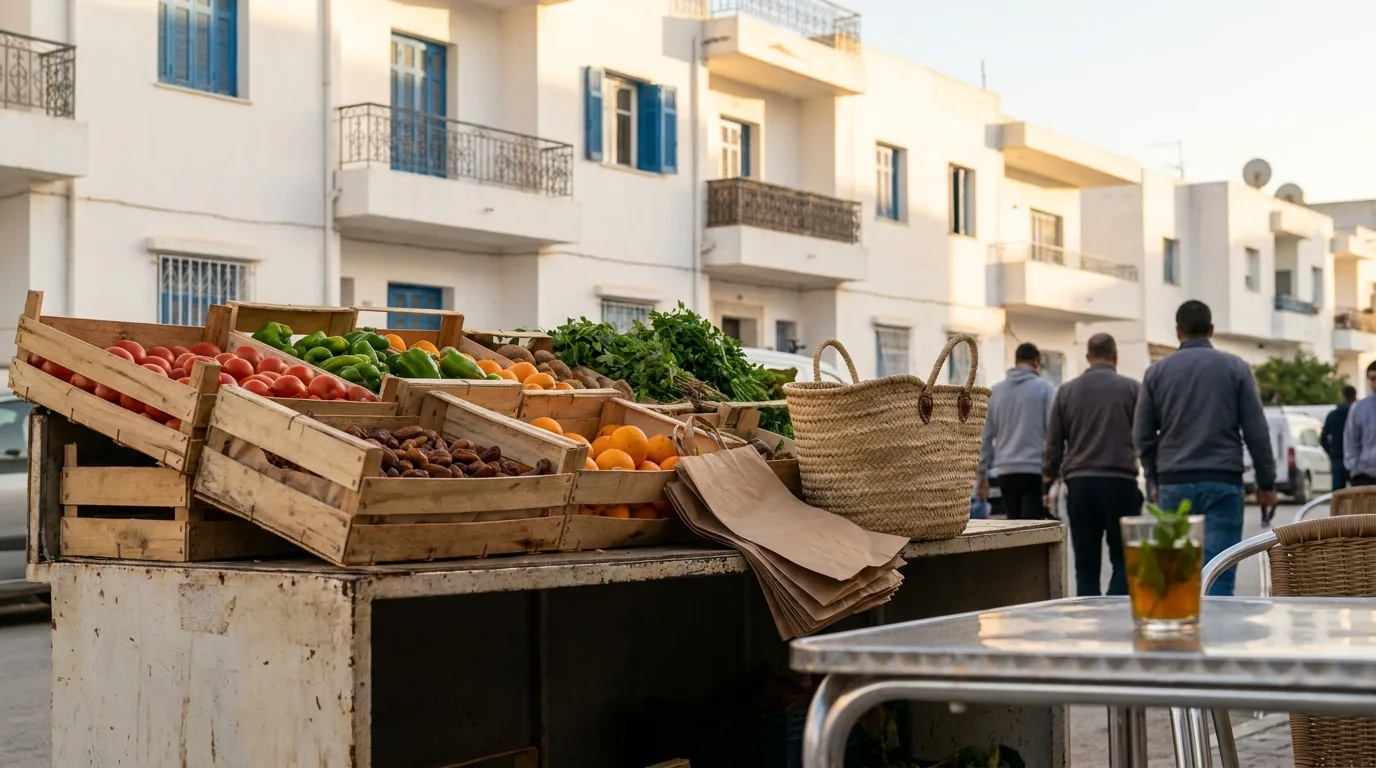
This is where Tunis is kindest to your budget, provided you shop seasonally. Fresh produce from the neighbourhood greengrocer or the covered market is cheap and very good: tomatoes, peppers, citrus, dates, olives, herbs, bread from the corner bakery. Olive oil, harissa, couscous and local dairy are everyday staples priced for local households.
The bill climbs quickly once you reach for imported things: foreign cheeses, branded breakfast cereals, certain coffees, pet food and most alcohol. These can cost as much as at home, or more. Our rule for long-stay guests: do the weekly shop at a supermarket for basics, buy fruit and vegetables at the market, and treat imported favourites as a treat rather than a habit.
Cafés and eating out
Café culture is one of the great pleasures of living here, and one of the cheapest. A coffee on a neighbourhood terrace costs a small fraction of what it would in Paris or London, and nobody will rush you. Street food and simple local restaurants (a lablabi, a brik, grilled fish in a family place) are equally easy on the wallet.
Prices change character in the places aimed at visitors and the well-off: seafront restaurants in La Marsa and Gammarth, hotel bars, and anywhere with a wine list. A month that mixes local lunches with the occasional seaside dinner is both realistic and affordable. For tipping, 5 to 10% in a restaurant with table service is generous; in cafés, round up.
Getting around
Transport is cheap as long as the meter is running. Yellow taxis start at around 1 to 2 TND, La Marsa to downtown Tunis should not cost more than about 15 TND, and a solid 30-minute ride works out at roughly 20 TND. After about 9 p.m. the night rate runs roughly 30 to 40% higher. inDrive, the ride-hailing app that actually works here, costs about 20% more than the meter but removes any negotiation. All of it is paid in cash. Our full breakdown is in taxi prices in Tunisia.
Phone, internet and utilities
Local prepaid data is cheap by European standards, and a registered local SIM (bring your passport) makes sense for a stay of a month. In a furnished rental, electricity, water and Wi-Fi are normally included in the price; if you rent unfurnished for longer, air conditioning in summer is what drives the electricity bill.
How the budget really breaks down
| Line item | How it behaves | Our tip |
|---|---|---|
| Accommodation | By far the largest cost; swings with season, area and booking channel | Stay 28+ nights, avoid July–August, book direct |
| Groceries | Cheap for local and seasonal food, expensive for imports | Market for produce, supermarket for basics |
| Cafés and eating out | Cheap locally, European prices in tourist spots | Local lunches, seaside dinners as treats |
| Transport | Low if the meter runs; night rate 30–40% higher | Meter on, small notes, inDrive as backup |
| Phone and data | Cheap once you have a local SIM | Register a SIM with your passport on day one |
Money habits that save more than you think
The Tunisian dinar is a closed currency, so pay for your accommodation by card in advance and use ATMs for daily cash. Always decline the offer to be charged in your home currency (it is always the worse rate), withdraw larger amounts less often, and break big notes at the supermarket. More in our guide to the Tunisian dinar for tourists.
Where a month with us fits in
We built our pricing with long stays in mind. Book Résidence Green B11 directly for 28 nights or more and you get 20% off the stay (15% from a week), with no platform service fee on top. The apartment is an S+1 in quiet Aïn Zaghouan Nord: real air conditioning, fast fibre Wi-Fi for remote work, an equipped kitchen for all that market produce, about ten minutes from the beach at La Marsa and ten to fifteen from the airport. Utilities and Wi-Fi are included, so the only budget you need to plan is the one for living well.