Is Tunisia Safe to Visit in 2026? An Honest Answer from a Tunis Local
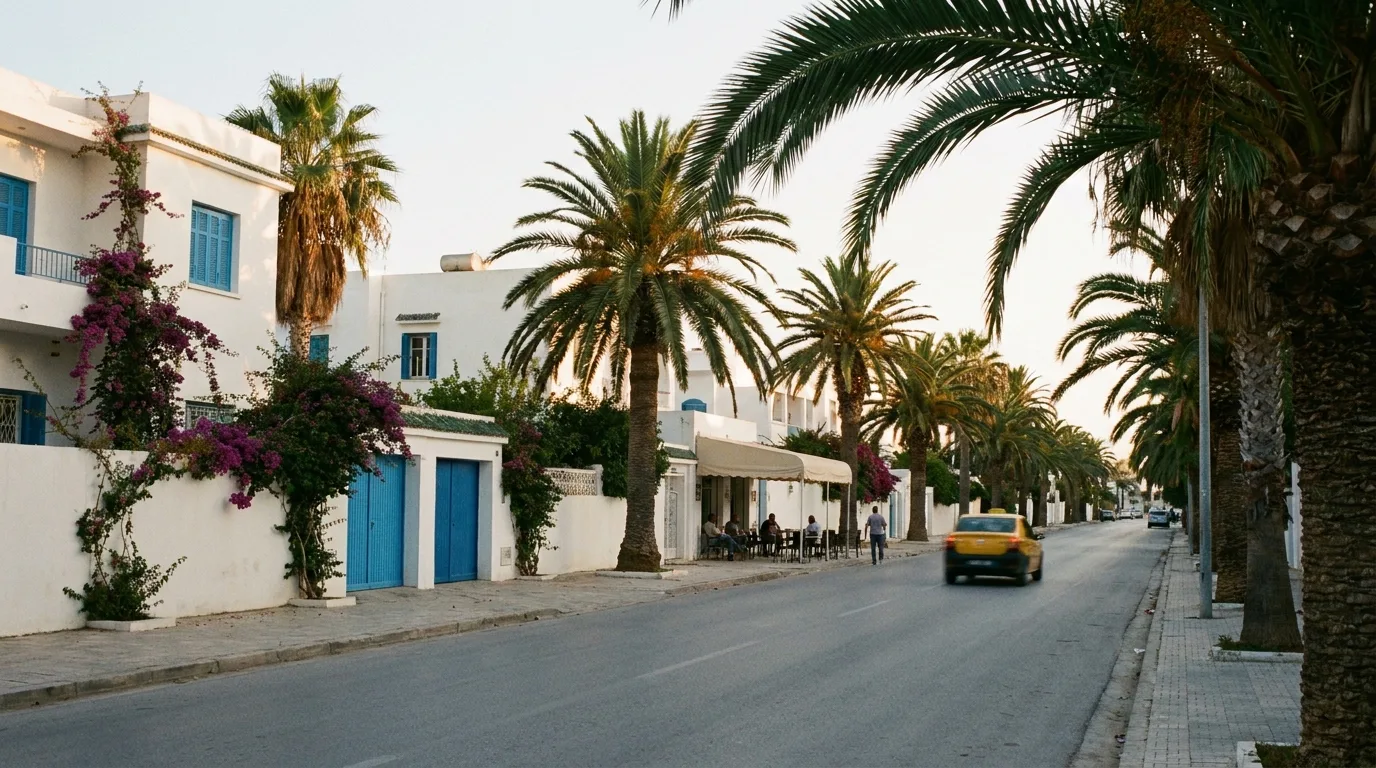
"Is Tunisia safe?" is the question we are asked more than any other, and it usually arrives late at night, half-apologetically, from someone who has already picked the apartment they want and just needs permission to press book. We live here, in Aïn Zaghouan Nord on the northern edge of Tunis, and we walk down to the bakery in the evening like everyone else on the street. So here is the honest version: not a tourist-board answer, and not a scare story either.
The short answer
Yes, for the parts of the country visitors actually go to. Tunis and its coastal suburbs, Carthage, Sidi Bou Saïd, La Marsa, Hammamet, Sousse and Djerba are ordinary, functioning places where millions of Europeans holiday every year. The realistic risk to a visitor here is pickpocketing in a crowded market or being overcharged for a taxi, not anything dramatic.
Where caution is genuinely warranted is in a handful of remote regions along the Libyan and Algerian borders and in parts of the mountainous interior. Those areas are nowhere near a normal itinerary, and travel advisories are specific about which governorates they mean rather than painting the whole country with one brush. Read your own government's page before you fly; it takes two minutes and it is more current than any blog post, including this one.
What people worry about, and what actually happens
| The worry | What it looks like on the ground |
|---|---|
| Violent crime against tourists | Rare. Tunisians are, as a rule, protective of visitors, and being visibly lost tends to attract help rather than trouble. |
| Pickpocketing and bag-snatching | The real risk, and it is concentrated in the Medina souks, downtown Tunis around Avenue Habib Bourguiba, and crowded transport. Ordinary city precautions are enough. |
| Getting ripped off | Common and mildly annoying rather than dangerous: mostly taxi fares and "friendly" guides who steer you to a shop. |
| Traffic | Honestly the thing we would flag first. Driving is assertive, lane discipline is a suggestion, and crossing a busy road takes commitment. |
| Terrorism | The reason many people are asking at all. Attacks affecting visitors are historic rather than recent, security around tourist sites and hotels is visible and heavy, and this is what advisories track most closely. |
Is Tunis safe at night?
In the northern coastal suburbs (La Marsa, Gammarth, Carthage, Sidi Bou Saïd, Aïn Zaghouan), yes, comfortably. These are residential neighbourhoods where families are out late, cafés stay busy well past midnight, and streets are lit and populated. We have guests who walk back from dinner in La Marsa without a second thought.
Downtown Tunis is a different rhythm. It is lively and perfectly fine in the evening, but after around 10 p.m. the area around the Medina and the main avenue empties of the things visitors want and fills with very little else. It is not a no-go zone; it is simply somewhere to take a taxi from rather than wander around aimlessly. That is one of the practical reasons we usually steer first-time guests towards the coast; we set out the full trade-off in our guide to where to stay in Tunis.
Is Tunisia safe for solo female travellers?
Broadly yes, with an asterisk that is about hassle rather than danger. Solo women travel around Tunis routinely, and Tunisian women are visible everywhere in public life: in cafés, driving, working late. What solo female visitors do report is street comments and persistent attention, mostly in the Medina, in the souks and around obviously touristy spots. It is wearying rather than threatening, and the standard response works: do not engage, keep walking, and it stops.
Dress is more relaxed here than most people expect, and you will see everything from shorts to headscarves on the same street in La Marsa. Covering shoulders and knees in the Medina, in small towns and at religious sites simply attracts less attention. In the coastal suburbs and on the beach, ordinary summer clothes are unremarkable.
The scam you will actually meet: taxis
If something goes wrong on your trip, statistically it will be a fare. Licensed yellow taxis all have meters, and on the meter they are excellent value: a ride from the airport to the northern suburbs runs roughly 10–15 TND. The taxis waiting at the Tunis-Carthage arrivals rank routinely quote 50 to 100 TND for that same trip, and each driver names a different number. It is not dangerous, but it is the moment most visitors decide the country is out to get them, on day one, before they have even reached the apartment.
The fix is simple: insist on the meter, or agree the price before you get in. We have written the real numbers down in our guide to taxi prices in Tunisia, and if you would rather skip negotiating entirely, the ride-hailing apps that actually work here let you fix the price in the app before the car arrives.
Things worth knowing before you land
- Cash matters. The dinar is a closed currency and card acceptance is patchy outside hotels and larger restaurants. Carry small notes, for taxis especially.
- Water. Tap water is treated and fine for brushing teeth; nearly everyone, locals included, drinks bottled.
- Ramadan. The rhythm of the day shifts: restaurants change hours, and eating or drinking in the street during daylight is impolite rather than illegal.
- Alcohol is legal and available, but sold in fewer places than you might expect and rarely on Fridays or public holidays. Buy ahead.
- LGBTQ+ travellers should know that same-sex relationships remain criminalised in Tunisian law. Prosecutions of visitors are not a realistic concern, but discretion in public is the norm.
- Photography. Do not photograph police, military or government buildings. Everything else is fair game.
So, should you come?
We are obviously not neutral, but we would not host if we did not think the honest answer was yes. The version of Tunisia most people are picturing when they ask this question is a decade old and was never true of the whole country anyway. The version you will actually meet is a Mediterranean capital where the biggest hazards are a chaotic roundabout and an optimistic taxi driver.
Our own corner of it, Aïn Zaghouan Nord, is a quiet modern residential district about 10–15 minutes from the airport, with Carthage and La Marsa beach around ten minutes away: a calm, well-lit base for a first trip, which is exactly why we chose it.